

Hey there!
Us marketers just love to see commercials.
Whether on YouTube or on the billboards we pass by daily, there lives our constant source of inspiration.
But when does love turn into annoyance?
Doesn’t YouTube bother you when it forces the same commercial over and over whenever you skip ahead during a video?
Or is it their way of telling me, “I heard you like commercials, here it is (for the FIFTIETH time!)so you get a REALLY good look.”
Guess it’s true manual retargeting is becoming futile.
But our move today is far from it.
🤔 To choose or not to choose?
Imagine this…
You’re at your favorite grocery store to get your weekly supplies.
The owner allowed two new booths to showcase their sweet jars o’jam.
They’re locally produced, but you never heard of them.
The sight of the round glass jars with floral-patterned lids has you instantly craving for that delicious mashed fruit.
(Nobody’s going to judge you if you’re thinking about grabbing a spoon and indulging in, go ahead.)
You check both visually, from a distance.
The first one has 24 varieties. That’s 24 different types to choose from. Maybe even one you’ve never tried. Who knows?
The other booth has just 6 flavors.
You start walking towards the large-variety booth, buy at the last second you change your mind, go quickly past over it, and head straight to the 6-flavors one.
“A jar of apricot, please.”
You just grabbed your favorite one, called it a crave-day, and went on with your shopping.
🧐 Why simplification works
So… what just happened?
The 24-variety stand included the 6 types the other one carried, plus an additional 18 flavors for you to select from.
Yet you, like most people, went for the simpler alternative.
This example was tested in practice in 2000, in a now famous experiment.
The interesting bit: the booth selling fewer alternatives had about 10x revenue compared to the large-variety one. That’s 10 TIMES!
Here’s the thing. Whenever someone buys something, there’s more than the act of, well, buying proper.
There’s also a gazillion factors that make one commit to a purchase.
And one of the most crucial ones is the effort to make a decision.
Whatever you name it — friction, time spent, presentation — people tend to find the easiest way in a buying process whenever possible.
That means adding variety can backfire when that variety involves adding extra mental hurdles.
🔥 Let’s use this!
Let’s see how you can put this in practice and sell more stuff.
Slash the extras and create subbrands
When Steve Jobs rejoined Apple, he downsized all the messy (300 products) product lineup.
From ‘98 on, the company focused on a few core products, such as the iMac and iBook (for consumers), PowerMac and PowerBook (for enterprise use).
Apple turned quickly from the brink of extinction ($1B net loss in 1997) to constantly increasing profits in a matter of years.
However, when consumers demand more variety, creating subbrands is perhaps the best strategy to increase diversity while preserving uniqueness (as opposed to doing line extensions).
Wrigley’s has created multiple subbrands for the chewing gum category: Orbit, Extra, Airwaves, Winterfresh, Eclipse, Hubba Bubba.
Though each subbrand comes with its own lineup, they each separately dominate a certain market position without overwhelming the consumer.
Make it ultra-simple
Most SaaS companies offerings are limited to 3, maximum 4 “flavors.”
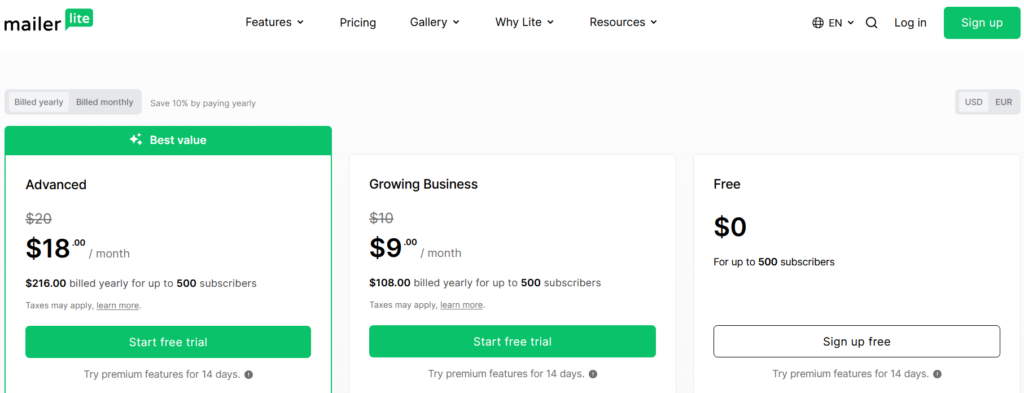
MailerLite, a great ESP, showcases its 3 main tiers, while the Enterprise plan is listed separately, below them.
Beehiiv, on the other hand, has chosen to get closer to potential enterprise customers, though the price paid is additional clutter.
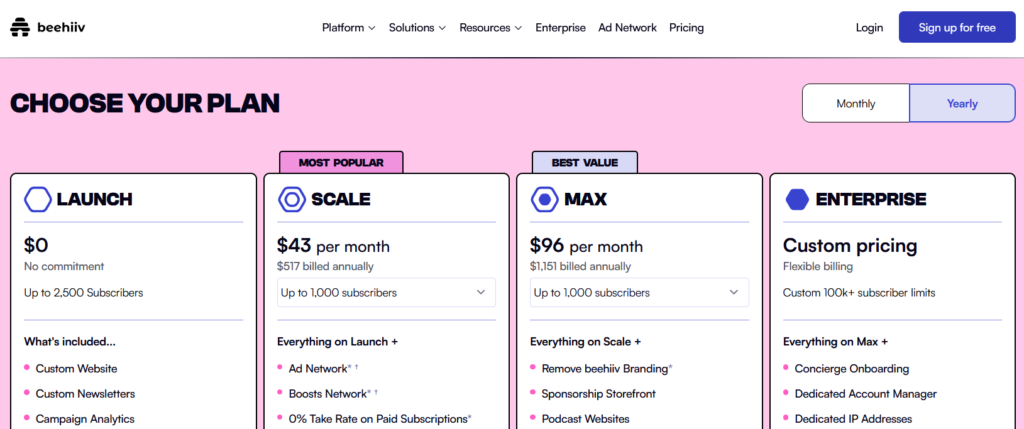
Having 5 plans or more would clearly be too much for clients to choose from.
Diversify when strong
What if, in our original example, the 24-variety booth would be run by none other than Heinz? Would they still run at a 10x loss?
Probably not. Heinz can even “afford” to boast it has tons of variety on its package, which features the “57 varieties” famous “stamp”.
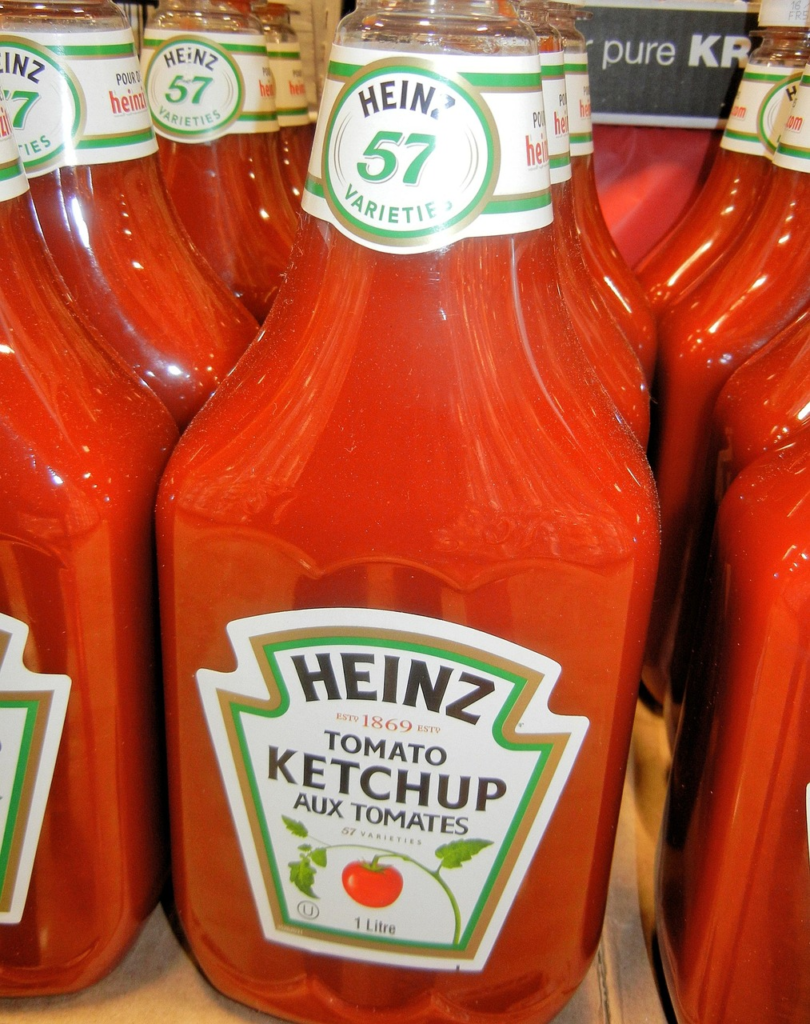
The reason Heinz can get away with it is that it is an established, all-time consumer favorite brand, including subbrands like Hellmans, or Kraft Mac and Cheese.
Consumers usually don’t think, “What ketchup/mayo/mac and cheese brand should I buy today?” Rather, the dialogue goes more like, “What kind of Heinz ketchup/Hellmans mayo/Kraft Mac and Cheese do I choose now?”
Having a reputation is in itself a friction-reducing feature, one companies like Heinz use to their advantage to dominate a market (and shelves).
And this applies consistently to whatever niche you’re selling to.
Make diversification a gradual process, that goes hand-in-hand with your branding and establishing.
—
And until next time,
Have a nice week ahead!
Dan